
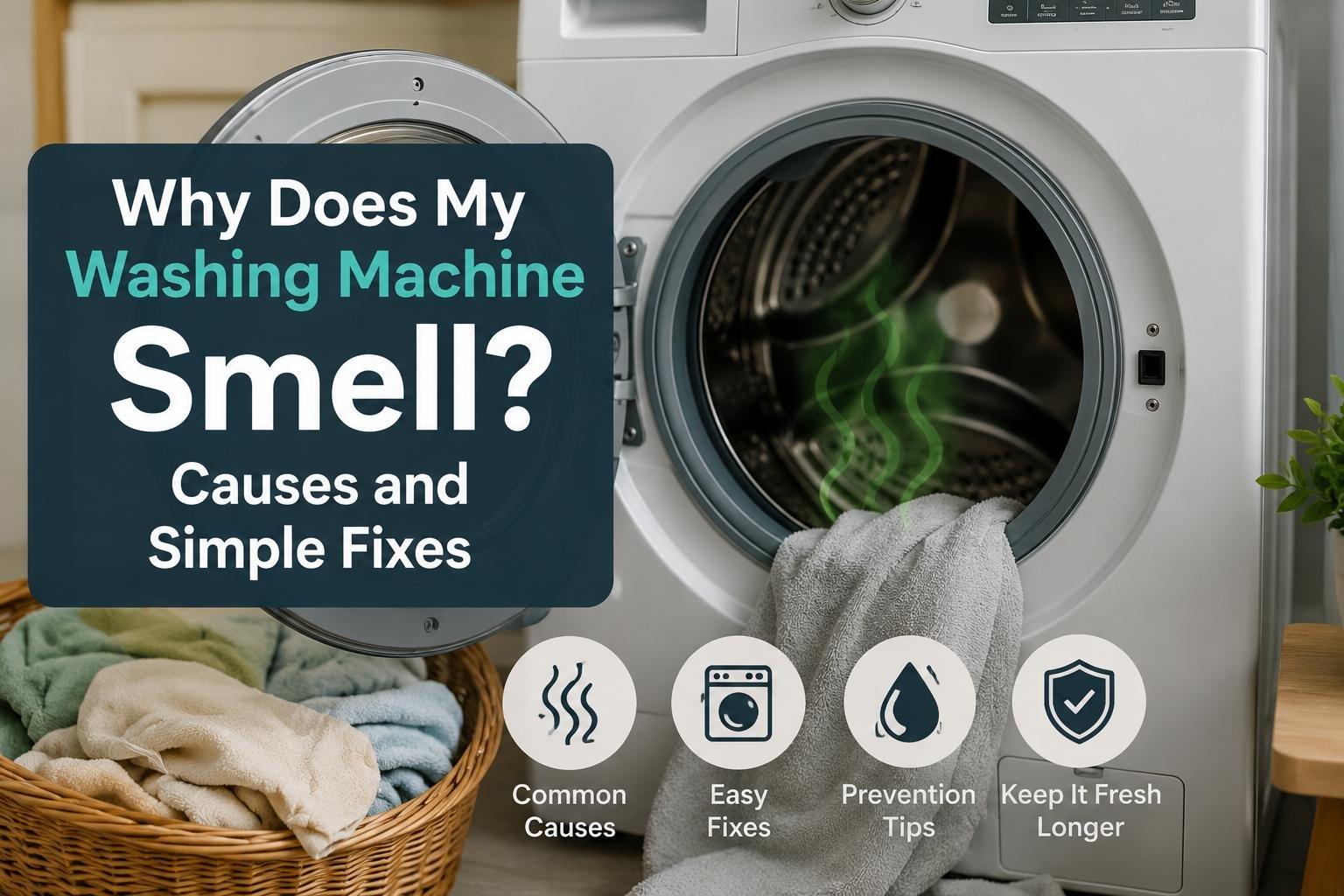

A washing machine can develop a bad, musty, sour, or unpleasant smell when moisture, detergent residue, dirt, and bacteria build up inside parts of the machine. The most common places for odor to develop are the door seal, detergent drawer, drum, filter, and drain area. Cleaning these areas, allowing the machine to dry properly, and using the correct amount of detergent can often help get rid of the smell.
If your washing machine smells bad even after a wash cycle, don’t ignore it. The odor can transfer to clothes and may become stronger over time. Fortunately, many common causes are relatively easy to identify and address.
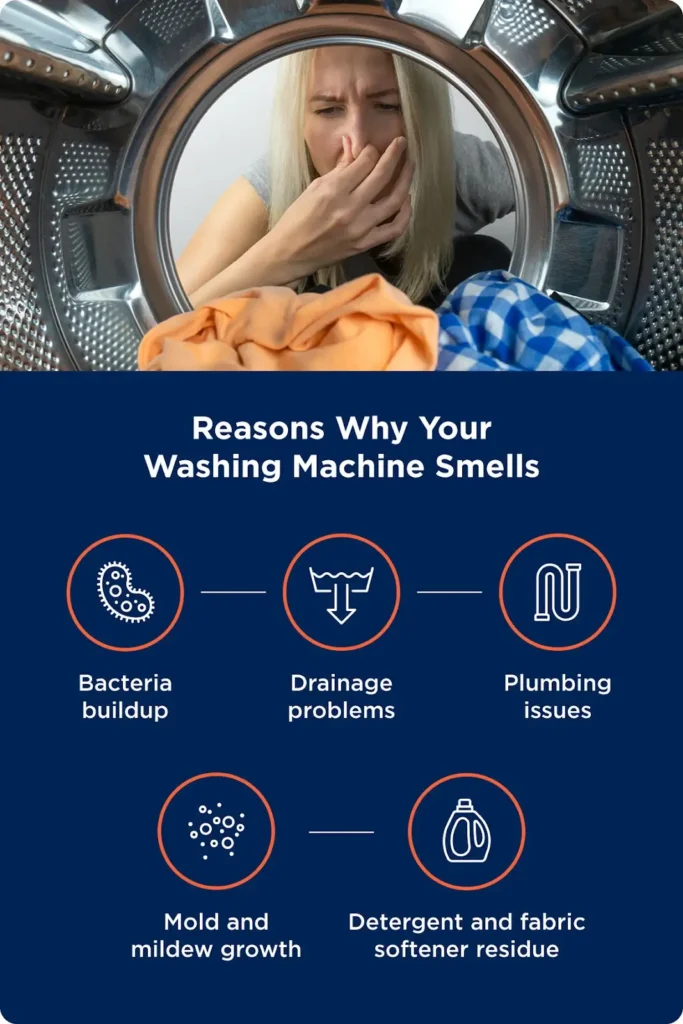
Washing Machine Smell ?
Common Reasons Your Washing Machine Smells
Before trying to fix the problem, it helps to understand where the smell may be coming from.
| Possible Cause | What You May Notice |
|---|---|
| Moisture trapped inside | Musty or damp smell |
| Dirty door seal | Black residue or unpleasant odor |
| Detergent buildup | Sticky residue or sour smell |
| Dirty detergent drawer | Mold or old detergent |
| Clogged filter | Bad smell and slow drainage |
| Dirty drum | Odor that returns after washing |
| Leaving the door closed | Damp smell after every wash |
| Too much detergent | Residue and unpleasant odor |
| Drain hose problem | Sewage-like or persistent smell |
The exact cause can vary depending on the washing machine design and how frequently it is used.
1. Check the Washing Machine Door Seal
If you have a front-loading washing machine, start by checking the rubber seal around the door.
Water, hair, lint, detergent residue, and small pieces of clothing can become trapped inside the folds. Because this area stays damp, it can develop an unpleasant smell.
What to do
- Open the washing machine door.
- Carefully pull back the rubber seal.
- Check the folds for lint, hair, dirt, or trapped objects.
- Wipe the seal with a clean damp cloth.
- Pay particular attention to areas where water or residue has collected.
- Dry the seal thoroughly after cleaning.
Do not pull or stretch the rubber aggressively because a damaged door seal can cause leaks.
2. Clean the Detergent Drawer
The detergent drawer is another common place for residue to build up.
Liquid detergent, powder, fabric softener, and water can combine to create a sticky layer. Over time, this residue may develop an unpleasant odor or encourage mold growth.
Cleaning steps
- Remove the detergent drawer if your machine allows it.
- Rinse it with warm water.
- Use a soft brush to remove stubborn residue.
- Clean the area where the drawer sits.
- Rinse away loosened residue.
- Dry the drawer before putting it back.
Check your washing machine manual if you are unsure how to remove the drawer.
3. Run a Suitable Cleaning Cycle
- Many modern washing machines have a dedicated Drum Clean, Tub Clean, or similar maintenance cycle.
- If your machine has one, follow the manufacturer’s instructions.
- A cleaning cycle can help remove buildup from areas that are difficult to reach manually.
Important
Washing Machine Smell ?. Do not mix cleaning chemicals together. In particular, never mix chlorine bleach with ammonia or acidic cleaning products because dangerous fumes can be produced.
Always follow the washing machine manufacturer’s instructions and the label on any cleaning product you use.
4. Check the Washing Machine Filter
A washing machine filter can collect lint, coins, hair, buttons, and other small objects.
If the filter becomes dirty or clogged, it may contribute to unpleasant odors and drainage problems.
Before cleaning the filter
- Turn off the washing machine.
- Disconnect it from the power supply if the manufacturer’s instructions recommend doing so.
- Have towels or a shallow container ready because water may come out.
- Check the user manual for the correct filter location and cleaning procedure.
Never force a filter if it does not open easily. Different washing machine models have different designs.
5. Leave the Door Open After Washing
One of the easiest ways to reduce washing machine odors is to let the interior dry.
After removing your laundry, leave the door slightly open when it is safe and practical to do so.
This allows air to circulate and reduces the amount of moisture trapped inside the drum.
If you have children or pets, make sure the open door does not create a safety risk.
6. Let the Detergent Drawer Dry
The same principle applies to the detergent drawer.
If the drawer remains closed while it is wet, moisture can remain trapped inside.
After a wash, leave the drawer slightly open when appropriate so it can dry.
You don’t need to leave it fully open all the time. The goal is simply to prevent moisture from remaining trapped for long periods.
7. Avoid Using Too Much Detergent
Using extra detergent may seem like a way to get cleaner clothes, but excessive detergent can leave residue behind.
That residue may accumulate inside the machine and contribute to unpleasant odors.
Use the amount recommended by the detergent manufacturer and consider factors such as:
- Load size
- Detergent concentration
- Water conditions
- Level of soil on the clothes
- Washing machine instructions
If your clothes are lightly soiled, adding significantly more detergent is usually unnecessary.
8. Don’t Overload the Washing Machine
An overloaded washing machine may not clean or rinse clothes effectively.
Clothes need enough room to move during the wash and rinse cycles. Overloading can also make it harder for water to circulate properly.
Instead of filling the drum as tightly as possible, follow your machine’s recommended load capacity.
9. Check for Drainage Problems
If the washing machine smells like sewage or the odor is particularly strong, the problem may not simply be dirty clothing or detergent buildup.
A drainage issue, drain hose problem, or plumbing-related issue may sometimes cause persistent unpleasant smells.
Look for other warning signs such as:
- Water remaining in the drum
- Slow drainage
- Gurgling sounds
- Water backing up
- Repeated sewage-like odor
- Leaks around the machine
If these symptoms occur, check the manufacturer’s instructions and consider getting professional help rather than repeatedly running cleaning cycles.
A Simple Washing Machine Cleaning Routine
Regular maintenance can help prevent odors from returning.
| Task | Suggested Routine |
|---|---|
| Wipe door seal | Regularly |
| Clean detergent drawer | Regularly |
| Leave door open to dry | After washing when practical |
| Check filter | According to manufacturer instructions |
| Run machine-cleaning cycle | According to manufacturer instructions |
| Check hoses and drainage | Periodically |
The exact frequency depends on the machine, how often it is used, and the manufacturer’s recommendations. Washing Machine Smells?
What Not to Do
When trying to remove a washing machine smell, avoid these common mistakes.
Don’t Mix Cleaning Chemicals
Combining different cleaning chemicals can create dangerous reactions or fumes.
Don’t Use Excessive Detergent
More detergent does not necessarily mean cleaner clothes and can increase residue.
Don’t Ignore a Persistent Sewage Smell
A strong sewage-like odor combined with drainage problems may indicate an issue that needs further investigation.
Don’t Force Machine Parts
Filters, drawers, seals, and panels can differ between models. If something does not move as described in your manual, don’t force it.
Don’t Close the Machine Immediately After Washing
Keeping moisture trapped inside can make odor problems more likely.
When Should You Call a Professional?
Many basic cleaning tasks can be done at home, but some situations require professional attention.
Consider contacting a qualified appliance technician or plumber if:
- The machine repeatedly smells like sewage.
- Water is not draining properly.
- The washing machine is leaking.
- You notice electrical problems.
- The machine makes unusual mechanical noises.
- The smell remains after proper cleaning and maintenance.
- You suspect a blocked or damaged drain connection.
- A repair requires opening electrical or mechanical components.
Never attempt electrical repairs if you are not qualified to perform them.
Frequently Asked Questions
Why does my washing machine smell even though I clean it?
The odor may be coming from areas that are easy to overlook, such as the door seal, detergent drawer, filter, drain area, or hidden residue inside the machine. Regular cleaning of these areas and proper drying can help.
Why do my clothes smell bad after washing?
Clothes can sometimes develop an odor if they remain damp for too long, the machine has buildup, the load is overloaded, or too much detergent is being used. Check both the clothes and the washing machine rather than assuming the detergent is the problem.
Should I leave my washing machine door open?
When safe and practical, leaving the door slightly open after washing can help moisture escape. If children or pets are around, use appropriate precautions.
Can too much detergent make a washing machine smell?
Yes. Excess detergent can leave residue inside the machine, which may contribute to unpleasant odors over time.
How often should I clean my washing machine?
There is no single schedule that applies to every machine. Follow the manufacturer’s maintenance recommendations and clean the door seal, detergent drawer, and other accessible areas regularly.
Related LifeExplained Guides
For more practical household solutions, explore these related LifeExplained articles:
- Why Does My Washing Machine Shake? Causes & Fixes — [Click Here]
- How to Make Your Home Feel More Comfortable Without Spending Much — [Click Here]
Final Takeaway
A bad smell from a washing machine is often caused by trapped moisture, detergent residue, dirt, or buildup in areas such as the door seal, detergent drawer, drum, filter, or drainage system.
Start by cleaning the accessible parts of the machine, allowing the interior to dry, using the recommended amount of detergent, and following the manufacturer’s maintenance instructions. If the smell is persistent, sewage-like, or accompanied by drainage, leaking, electrical, or mechanical problems, professional assistance may be the safest option.
A few simple maintenance habits can help keep your washing machine cleaner, fresher, and ready for the next load.